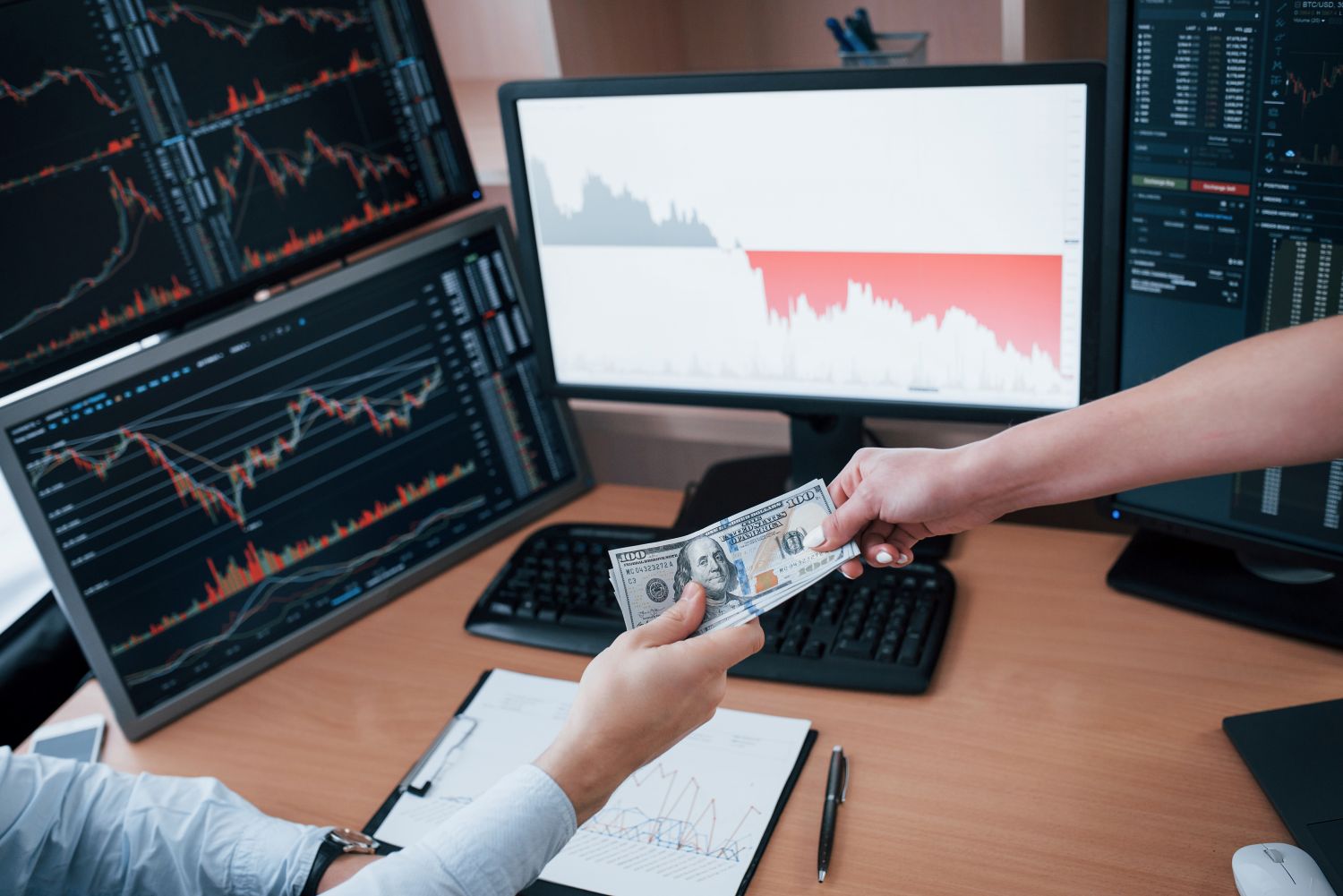
As financial markets evolve, the concept of trading leverage emerges as a pivotal force that could redefine investment strategies in the Philippines. With the local market facing unique challenges and opportunities, understanding how leverage operates-alongside its benefits and risks-is crucial for investors. This article explores the current landscape of investing in the Philippines, the implications of leverage on trader psychology and risk management, and the regulatory environment shaping these practices. Can leveraging transform the future of investing in the archipelago? The answer promises to be illuminating.
Definition and Importance
Trading leverage refers to the ability to utilize borrowed funds in order to enhance the potential return on investment, which is essential for strategies such as margin trading. Trading leverage enables traders to control a larger position with a smaller capital investment, making it a powerful tool for maximizing opportunities in the market.
For example, a leverage ratio of 10:1 implies that for every $1 of personal capital, an individual can borrow $10.
Platforms commonly used in Forex trading frequently employ trading leverage to magnify gains resulting from currency fluctuations. While trading leverage has the capacity to significantly increase potential profits, it simultaneously elevates risk; for example, a 10% decline in the market could result in losses that surpass the initial investment.
Consequently, it is imperative to implement risk management tools, such as stop-loss orders, to mitigate potential losses effectively.
Global Perspective on Trading Leverage
Across the globe, various financial markets demonstrate differing levels of leverage, with Forex trading platforms generally offering leverage ratios of up to 100:1, in contrast to the 2:1 leverage commonly found in stock markets.
In the United States, the Commodity Futures Trading Commission (CFTC) regulates Forex trading by capping leverage at 50:1 for major currency pairs, while permitting higher margins for commodities.
In contrast, European markets, governed by ESMA regulations, limit Forex leverage to 30:1 in order to promote safer trading practices.
In the Asian markets, such as Japan, high leverage is permitted, which fosters aggressive trading strategies due to cultural attitudes that favor risk-taking.
It is essential for traders to understand these regional differences, as they can significantly impact trading strategies and risk management approaches.
The Current State of Investing in the Philippines
The investment landscape in the Philippines is becoming increasingly dynamic, influenced by the emergence of a growing middle class and advancements in financial technology.
Market Overview
As of 2023, the Philippine Stock Exchange (PSE) has experienced a 15% increase in trading volume, which indicates a strong interest in local equities. Economic indicators reveal a GDP growth rate of 5.7% in the second quarter of 2023, reflecting robust domestic consumption and investment. Concurrently, inflation rates have stabilized at approximately 4.5%, creating a favorable environment for investors.
Key indices, including the PSEi, have benefited from this growth, with significant sectors such as finance and consumer goods leading the gains. Investors are encouraged to monitor upcoming earnings reports and global economic developments, as these factors may further influence market sentiment.
Investment Trends and Challenges
Emerging trends in the Philippines indicate a notable shift towards online trading platforms, with 60% of investors now participating in the Forex and cryptocurrency markets. This significant transition underscores the increasing importance of fintech solutions, including mobile applications such as GCash Invest and PayMaya, which enable users to trade stocks and cryptocurrencies directly from their mobile devices.
Investors are currently facing challenges due to market volatility, exemplified by the fluctuating prices of Bitcoin and the effects of global economic events. Additionally, regulatory concerns are becoming more pronounced, particularly as the Securities and Exchange Commission (SEC) tightens regulations on digital assets to safeguard consumers.
To navigate these changes and mitigate risks, it is advisable for investors to remain informed through platforms such as Investagrams and to engage in continuous learning via webinars.
Understanding Trading Leverage
To effectively utilize trading leverage, it is essential to understand its mechanics and recognize that it can serve as both an asset and a liability.
How Leverage Works
Leverage facilitates the ability for traders to borrow funds, typically through margin accounts, thereby amplifying their positions without the necessity of investing the full amount upfront.
For example, in Forex trading, a broker may offer leverage of 100:1, enabling a trader to control an amount of $100,000 with an initial deposit of only $1,000. However, this approach entails significant risks; a mere 1% adverse movement against the trader’s position could result in the total loss of their margin.
In the context of stock trading, if an individual purchases shares valued at $10,000 with a margin requirement of 50%, they would only need to invest $5,000 of their own capital.
Potential returns can be calculated by leveraging these positions; for instance, a 10% increase in value could yield a profit of $1,000 on a $10,000 investment, effectively demonstrating both the benefits and risks associated with the use of leverage.
Benefits and Risks of Using Leverage
Utilizing leverage can significantly amplify profits; however, it also introduces considerable risks, including the potential for margin calls and heightened market exposure. To effectively navigate these risks, it is essential to establish a comprehensive risk management strategy.
For instance, maintaining a risk-reward ratio of at least 1:2 is advisable, ensuring that potential profits exceed potential losses. Implementing stop-loss orders can help mitigate losses and prevent emotionally driven decision-making.
Additionally, considering practice with a demo account prior to engaging in live trading can allow traders to refine their strategies without incurring financial risks.
By comprehensively understanding both the advantages and risks associated with leverage, traders are better equipped to make informed decisions that contribute to long-term success.
Impact of Trading Leverage on Investors
The impact of trading leverage on investors is significant, affecting both their risk management strategies and their psychological resilience.
Leverage and Risk Management
Effective risk management is essential when employing leverage; implementing strategies such as setting stop-loss orders can help mitigate potential losses.
Position sizing is also of paramount importance. It is advisable to risk no more than 1-2% of your capital on a single trade. For example, if your capital amounts to $10,000, the appropriate risk per trade would range from $100 to $200.
Moreover, diversification serves as a protective measure-distributing investments across various assets or sectors can prevent significant losses stemming from a single underperforming investment. For instance, if one trades stocks in both technology and consumer goods, a downturn in one sector may be counterbalanced by stability in another.
Employing these methods in conjunction can significantly enhance overall trading resilience.
Psychological Effects on Traders
Leveraged trading can amplify emotions, leading to impulsive decisions and increased anxiety among traders, ultimately impacting their performance. Understanding the psychological effects of leverage is essential, as traders often face heightened fear of loss, which may cause them to exit trades prematurely or engage in overtrading in an effort to recover losses.
To maintain discipline, it is advisable to establish a pre-defined trading plan and adhere to it consistently. Employing tools such as trading journals can aid in tracking emotions and decision-making processes.
Additionally, techniques such as mindfulness and deep-breathing exercises can assist in alleviating anxiety.
Implementing strict risk management rules-such as limiting losses to 1-2% of one’s portfolio-can provide a safeguard against emotional trading impulses.
Regulatory Environment in the Philippines
The regulatory environment in the Philippines has developed to effectively address the complexities associated with trading leverage, ensuring the protection of investors while simultaneously promoting market growth.
Current Regulations Governing Leverage
As of 2023, the Securities and Exchange Commission (SEC) has established a maximum leverage ratio of 10:1 for retail accounts to enhance investor protection. This regulation is designed to mitigate the risk of substantial losses, ensuring that investors do not overextend themselves beyond a manageable financial threshold.
Brokers are required to adhere to specific obligations, including the proper disclosure of risks associated with high-leverage trading and the implementation of effective risk management measures. Investor protections also encompass mandatory negative balance protection, which ensures that clients cannot lose more than their initial investment.
Reputable brokers such as TD Ameritrade and E*TRADE offer comprehensive resources and tools to assist investors in understanding the implications of leverage and making informed investment decisions.
Future Regulatory Changes and Implications
Anticipated regulatory changes may involve the implementation of stricter limits on leverage in response to heightened market volatility and the imperative for enhanced investor protection.
These adjustments have the potential to significantly alter trading behaviors. For example, a reduction of the leverage cap from 10:1 to 5:1 would necessitate that investors allocate more capital upfront, which could, in turn, diminish speculative trading activities.
Furthermore, increasing margin requirements may foster a culture of more comprehensive research prior to making investment decisions. Tools such as trading simulators and analytics software may prove to be essential as investors modify their strategies to align with the new regulatory guidelines.
While such changes may contribute to a more stable market environment, they could simultaneously discourage risk-taking behavior, thereby affecting overall liquidity.
Future Trends in Trading Leverage
Future trends in trading leverage are anticipated to be influenced by technological advancements and evolving market dynamics.
Technological Advancements
Innovations such as algorithmic trading and AI-driven platforms are transforming the utilization of leverage in trading, thereby enhancing both efficiency and outcomes.
Tools such as MetaTrader 5 and Thinkorswim have integrated sophisticated algorithms that analyze market trends in real-time, enabling traders to make informed decisions with greater speed.
Platforms like eToro and Alpaca provide users the opportunity to implement AI-driven strategies without necessitating extensive coding knowledge.
It is essential for traders to evaluate their performance using metrics such as the Sharpe Ratio, which assesses risk-adjusted returns, allowing for continuous refinement of their leverage strategies.
By effectively leveraging these technologies, traders can optimize their application of leverage, ultimately improving their trading success.
Potential Market Shifts
Market shifts influenced by global economic indicators, such as interest rates and inflation, are expected to impact the dynamics of trading leverage in the coming years.
As interest rates rise, for example, borrowing costs increase, prompting traders to reassess their leverage levels. A trader utilizing 10x leverage in a low-interest environment may choose to reduce this to 5x as rates increase, thereby mitigating risk.
Increased market volatility typically encourages a more cautious approach; traders may implement strategies such as stop-loss orders or portfolio diversification to safeguard against rapid downturns. Staying informed through economic calendars and market analyses is essential.
By adapting their strategies in response to these external factors, traders can effectively navigate changing market conditions.
Summary of Key Insights
Understanding the complexities of trading leverage, including its benefits and associated risks, is essential for any investor aiming to enhance their investment strategy.
Leverage give the power tos investors to control larger positions with a smaller capital outlay, effectively magnifying potential gains. For instance, employing 10x leverage enables an investor to control a position worth $10,000 with an initial investment of only $1,000.
However, the risks are equally magnified; a 10% decline in the asset’s value can result in the complete loss of the initial investment. To manage this risk effectively, it is advisable to utilize tools such as stop-loss orders, which automatically liquidate a position at a predetermined price, or margin calculators to provide a clearer understanding of exposure.
Investors should always begin with a smaller leverage ratio until they gain sufficient confidence in their trading strategy.
Final Thoughts on the Future of Investing
As technology continues to advance and regulations evolve, the future of trading leverage is set to significantly reshape investment strategies and opportunities.
Investors should embrace new tools to effectively navigate this changing landscape. For instance, platforms such as TradingView offer sophisticated charting capabilities and allow users to set alerts for changes in leverage.
In addition, utilizing risk management software like TradeTrim can aid in the dynamic tracking and adjustment of leverage levels. It is imperative to remain informed about regulatory updates, as these can directly affect leverage ratios.
Participating in online trading communities or subscribing to financial news feeds can provide timely insights, thereby give the power toing investors to make informed decisions in this rapidly evolving environment.
Frequently Asked Questions
1. What is trading leverage and how does it affect investing in the Philippines?
Trading leverage is a financial tool used in investing that allows investors to control a larger amount of assets with a smaller initial investment. In the Philippines, trading leverage can shape the future of investing by providing individuals and businesses with more opportunities to participate in the market and potentially increase their returns.
2. How does trading leverage work in the Philippine market?
In the Philippine market, trading leverage is typically offered by brokerage firms and allows investors to borrow funds to increase their purchasing power. This means that for a certain initial investment, investors can control a larger amount of assets, potentially leading to higher returns. However, it is important to carefully manage the risks associated with trading leverage as it can also lead to larger losses.
3. What are the advantages of using trading leverage in investing?
One of the main advantages of trading leverage is that it allows individuals and businesses to participate in the market with a smaller initial investment. This can potentially lead to higher returns and more opportunities for diversification. Additionally, trading leverage can also offer the opportunity for short-term gains and the ability to take advantage of market volatility.
4. Are there any risks associated with trading leverage in investing?
While trading leverage can provide opportunities for higher returns, it also comes with certain risks. The main risk is the potential for larger losses, as trading leverage amplifies the effect of market movements. In addition, investors may also face margin calls, where they are required to deposit additional funds to cover potential losses. It is important to have a thorough understanding of the risks and to have a risk management plan in place when using trading leverage.
5. How can an individual or business in the Philippines get started with trading leverage in investing?
To get started with trading leverage in investing, individuals and businesses can open a trading account with a brokerage firm that offers this service. They will need to meet the minimum requirements and go through the necessary steps to activate the trading leverage feature. It is also important to have a solid understanding of the market and the risks associated with trading leverage before getting started.
6. Can trading leverage really shape the future of investing in the Philippines?
Yes, trading leverage has the potential to shape the future of investing in the Philippines by providing more opportunities for individuals and businesses to participate in the market and potentially increase their returns. However, it is important to use trading leverage carefully and have a thorough understanding of the risks involved in order to make informed investment decisions and mitigate potential losses.